ASU TRANSCEND Trainee Spotlight: Sydney Pisano
Sydney is currently a first year Master’s student in Nutrition and a MCH trainee at Arizona State University’s College of Health Solutions. She received her Bachelor’s in Nutrition (Dietetics) in 2018, also from Arizona State University. In the past, she was a Nutrition Instructor for the City of Tempe, where she taught Nutrition classes to people of all ages, from preschool to retirement age. Currently, she is a research assistant for the School Lunch Study at ASU, where salad bars and marketing materials are put in schools to see if fruit and vegetable consumption are affected. In this blog post, she will describe her thesis research on nutrition marketing and how marketing affects children.
In the US today, 70-90% of students are e xposed to some form of food marketing in schools.1 Under the Healthy-Hunger Free Kids Act of 2010 and the “Smart Snacks in School” policy of 2014, participating schools were limited in what they could serve and market to children.2,3 This combined with local district nutrition policies, helped decrease the exposure of high sugar and high calorie foods at schools.2,3 However, current research shows that there has not been a large increase in the consumption of fruits and vegetables even with these new policies enacted.4
While schools are having trouble trying to get children to eat their meals, fast food companies are putting billions of dollars a year into marketing their products.5 When fast food companies market specifically to children, they increase their sales.5 They use bright colors, fun characters and prizes to influence children to want their product.5 One way that fast food companies develop their marketing materials is through interviews and focus groups with their target population.5 By doing this, they can determine exactly what appeals to children and then have their company develop products based on that. Although many successful companies utilize focus groups to help increase their sales, there is currently very little research on how children perceive school nutrition marketing materials
For her thesis, Sydney will be conducting interviews with children in grades 3-12 and determining their opinions on different nutrition marketing materials. The primary goal of her thesis is to determine what children like or dislike about the various marketing materials and if they motivate them to increase their consumption of fruits and vegetables.
References
- Hales CM, Carroll MD, Fryar CD, Ogden CL. Prevalence of Obesity Among Adults and Youth: United States, 2015-2016 Key Findings Data from the National Health and Nutrition Examination Survey.; 2015.
- Johnson DB, Podrabsky M, Rocha A, Otten JJ. Effect of the Healthy Hunger-Free Kids Act on the Nutritional Quality of Meals Selected by Students and School Lunch Participation Rates. JAMA Pediatr. 2016;170(1):e153918.
- Smart Snacks in School USDA’s "All Foods Sold in Schools" Standards. https://fns-prod.azureedge.net/sites/default/files/cn/allfoods-flyer.pdf.
- Bourke M, Whittaker PJ, Verma A. Are dietary interventions effective at increasing fruit and vegetable consumption among overweight children? A systematic review. J Epidemiol Community Heal. 2014;68(5):485-490. doi:10.1136/JECH-2013-203238
- Harris JL, Marlene Schwartz MB, Munsell CR, et al. Measuring Progress in Nutrition and Marketing to Children and Teens Fast Food FACTS 2013: Measuring Progress in Nutrition and Marketing to Children and Teens.; 2013.
 Veronica is a first-year graduate student in the Nutrition program at the University of Tennessee, Knoxville (UTK). Veronica also received her Bachelor of Science in Nutrition at UTK in 2014. She then went on to complete her dietetic internship at Vanderbilt University Medical Center. Veronica worked as a registered dietitian in the Women, Infants and Children (WIC) program in South Carolina, and served as a clinical dietitian in the island of American Samoa. Veronica has been a MCH Nutrition trainee since August 2018.
 Somadee is a first year MPH Nutrition student in coordinated masters program at the University of Minnesota Twin Cities where she also received her undergraduate degree in nutrition and dietetics in 2018. She began her MCH traineeship in September 2018 and has been working on the development of the University of Minnesota’s Public Health Nutrition newsletter. Somadee is passionate about increasing healthy food access through transformation of the agricultural system to prioritize investments in healthy foods and farms and through the creation of a more transparent supply chain.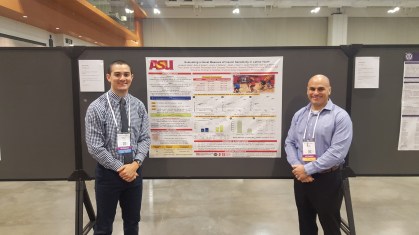
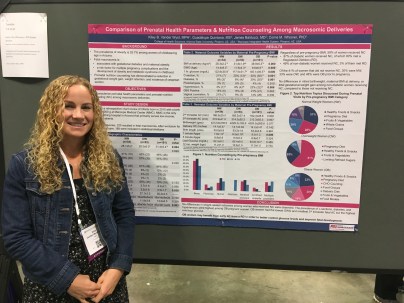
 Amber Ford, an alumnus of the Maternal and Child Health Leadership traineeship, is a registered and licensed dietitian at the Knox County Health Department. At the University of Tennessee, Amber completed a dual Master’s program in Public Health and Public Health Nutrition, and completed the dietetic internship. As a Public Health Educator, Amber has focused on school health for the past three years.
  Noelle is a second-year MPH Nutrition student in the coordinated masters program and an MCH Nutrition trainee at the University of Minnesota Twin Cities. She completed her bachelors of science at the University of Nebraska- Lincoln in nutrition, exercise, and health sciences in 2017 with minors in Spanish and business administration. After graduation in August 2019, Noelle plans to work in school nutrition.

 MCH Nutrition Trainee Hub
You must be logged in to post a comment.